
A strong brand is not built by accident—it is created through planning, consistency, and clarity. A branding strategy is the structured process that defines how a business presents itself to the world, how it communicates value, and how it builds long-term trust with customers.
In today’s competitive digital market, customers don’t just buy products—they choose brands they recognize and trust. This is why businesses of all sizes invest in structured brand planning and long-term positioning.
This guide explains the full process of building a strong brand from scratch using practical steps, real-world examples, and proven marketing principles.
What Is a Branding Strategy?
A branding strategy is a long-term plan that defines how a business builds identity, communicates value, and creates recognition through positioning, messaging, design, and customer experience.
Why Branding Matters in Modern Business
Branding plays a major role in how customers perceive your business. It influences trust, emotional connection, and purchasing decisions.
A strong business identity ensures consistency across all customer touchpoints—from your website to social media and advertisements. When people recognize your brand easily, they are more likely to choose it over competitors.
Instead of focusing only on marketing campaigns, successful companies invest in long-term brand development because it creates sustainable growth and reduces customer acquisition costs over time.
Understanding the Process of Building a Strong Brand
Before diving into execution, it’s important to understand how modern brand building works. A structured approach ensures that every decision aligns with business goals and customer expectations.
This process includes defining purpose, identifying audience behavior, shaping market positioning, and maintaining consistent communication across platforms. These elements work together to form a complete brand system that evolves with your business.
Step 1: Define Your Business Purpose
Every successful brand starts with a clear purpose. This step focuses on understanding why your business exists beyond profit generation.
A strong purpose helps you stay consistent and makes your messaging more meaningful. Businesses that clearly define their mission are more likely to build emotional connections with their audience and stand out in competitive industries.
Step 2: Study Your Target Audience
Understanding your audience is essential for building relevance. Customers expect brands to understand their needs, challenges, and goals.
By studying behavior patterns, pain points, and motivations, businesses can create messaging that resonates deeply. This improves engagement and supports long-term growth.
Audience insights also help refine your overall marketing direction and improve conversion rates.
Step 3: Develop Clear Market Positioning
Positioning is what makes your business different from competitors. It defines the unique space your brand occupies in the market.
A strong positioning statement clearly communicates who you serve, what problem you solve, and why you are the best choice.
This step is one of the most important parts of building a competitive brand system because it directly influences customer perception and decision-making.
Step 4: Build a Consistent Brand Identity
Brand identity includes all visual and emotional elements that represent your business. This includes design, typography, color palette, tone of voice, and overall communication style.
Consistency is the most important factor here. When customers see the same identity across platforms, it builds familiarity and trust. Over time, this recognition turns into loyalty.
Step 5: Create Clear Brand Messaging
Messaging defines how your brand communicates with the world. It should clearly express your value, benefits, and uniqueness.
Strong messaging ensures that customers immediately understand what your business offers and why it matters to them. This includes website copy, advertising content, social media posts, and customer communication.
Step 6: Choose the Right Marketing Channels
Once your brand foundation is ready, the next step is distribution. Selecting the right platforms ensures that your message reaches the right audience.
Different businesses perform better on different channels depending on their industry and audience behavior. Combining organic visibility with structured digital marketing improves reach and long-term performance.
This is where modern Digital Marketing Strategies play a key role in scaling brand awareness and attracting qualified traffic.
Branding Strategy Framework
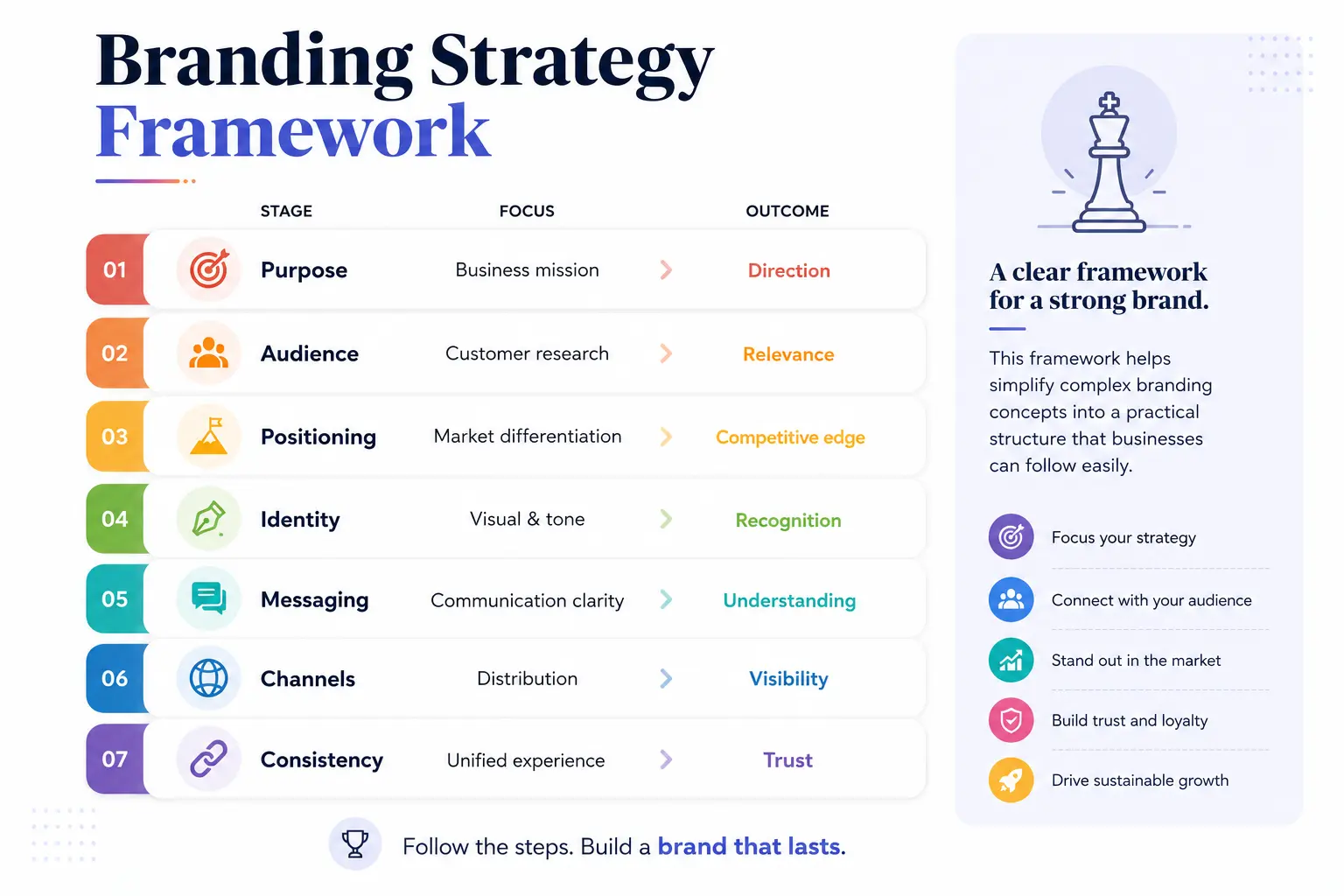
| Stage | Focus | Outcome |
| Purpose | Business mission | Direction |
| Audience | Customer research | Relevance |
| Positioning | Market differentiation | Competitive edge |
| Identity | Visual & tone | Recognition |
| Messaging | Communication clarity | Understanding |
| Channels | Distribution | Visibility |
| Consistency | Unified experience | Trust |
This framework helps simplify complex branding concepts into a practical structure that businesses can follow easily.
Real Branding Strategy Examples
Some of the world’s most successful companies follow simple but powerful branding principles.
Apple focuses on innovation and simplicity. Nike builds emotional motivation through storytelling. Starbucks creates a consistent global experience centered around comfort and community.
These examples show that successful branding is not about complexity—it is about clarity, repetition, and emotional connection.
How Branding Works in AI Search & Modern SEO
Search behavior is evolving with AI-powered engines and generative search results. Today, brands must focus on clarity, authority, and structured content to stay visible.
Improving topical authority, answering user questions directly, and building high-quality content clusters helps improve visibility in AI-driven search systems.
This approach also supports broader Startup Marketing Strategy goals by increasing organic discoverability and brand authority.
External Resources for Further Learning
If you want to deepen your understanding of branding and modern SEO best practices, these trusted industry resources offer valuable insights and practical guidance:
- HubSpot Branding Guide — A beginner-friendly resource covering brand development, positioning, and messaging fundamentals.
- Google SEO Starter Guide — Official guidance from Google on building search-friendly, high-quality content.
- Neil Patel Brand Strategy Insights — Practical strategies and examples for improving brand visibility online.
- Forbes Branding Articles — Expert perspectives on branding trends, leadership, and business growth.
Using trusted sources like these helps you stay updated with industry best practices and make better long-term branding decisions.
Conclusion
A well-planned branding system helps businesses build trust, recognition, and long-term growth. Instead of focusing only on visuals or short-term marketing, successful companies invest in consistent messaging, strong positioning, and customer experience.
When executed properly, branding becomes a long-term growth engine that supports every part of your business strategy.
Need help building your brand? Contact Maltar Services today and create a custom strategy for faster business growth.
Quick FAQs
It is a structured plan that defines how a business builds identity, trust, and recognition.
It helps businesses stand out, attract customers, and build long-term loyalty.
Start by defining purpose, understanding your audience, and creating clear positioning.
Consistency, clarity, and emotional connection with customers.
Yes, it helps small businesses compete effectively and grow faster in the market.